00 Gallery v1.1.10 Release
2026-10-15
What it actually looks like
Every screenshot came off a real unit at its native 320 by 240, and every photograph is of a device I built and use. Tap any screenshot to see it bigger.
- 320×240Native panel
- 2.8″Diagonal
01 The home screen
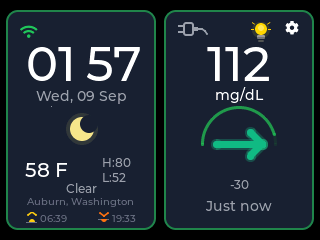
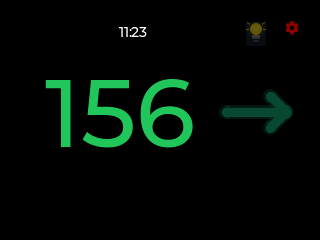
The screen it sits on all day
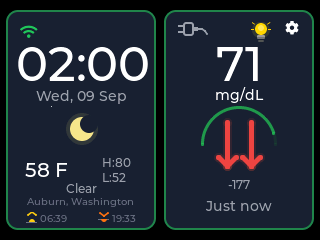
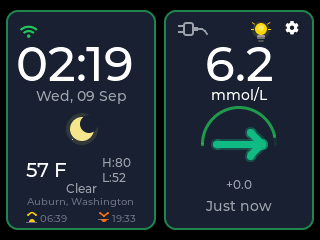
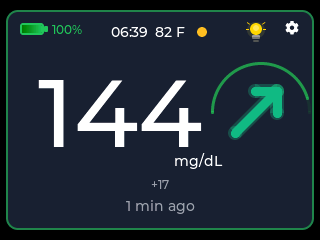
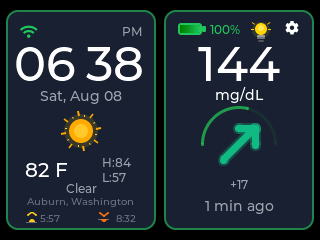
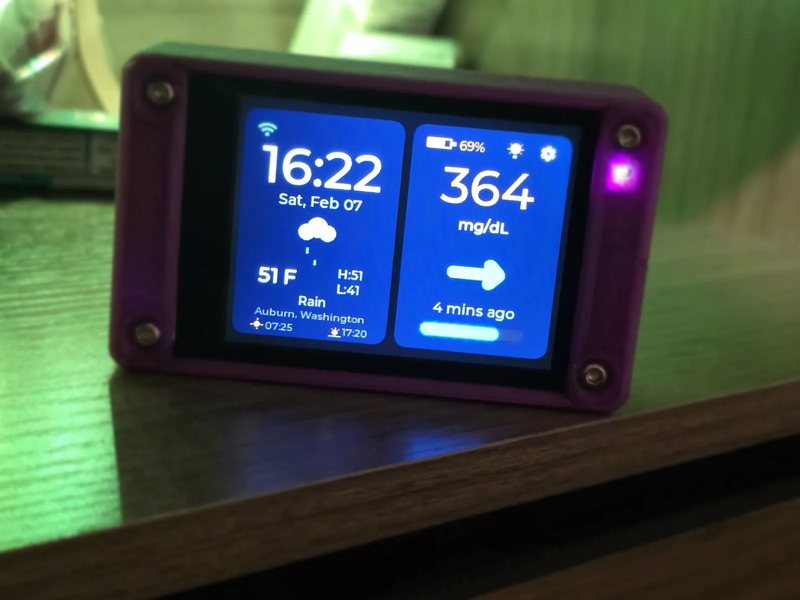
The clock and the weather live on the left, the reading and its trend on the right. From across a room you read the colour and the arrow before the number.
02 When it isn't working
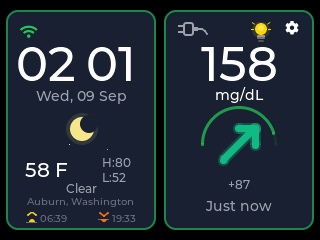
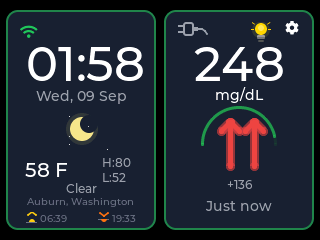
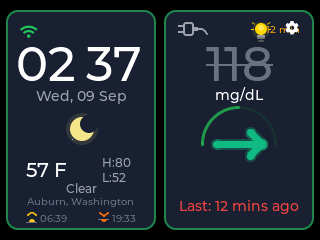
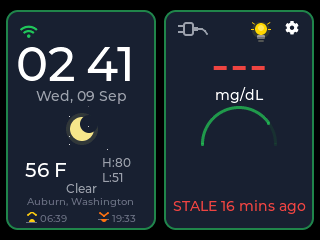
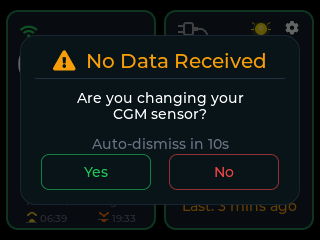
A reading that stopped arriving should look like one
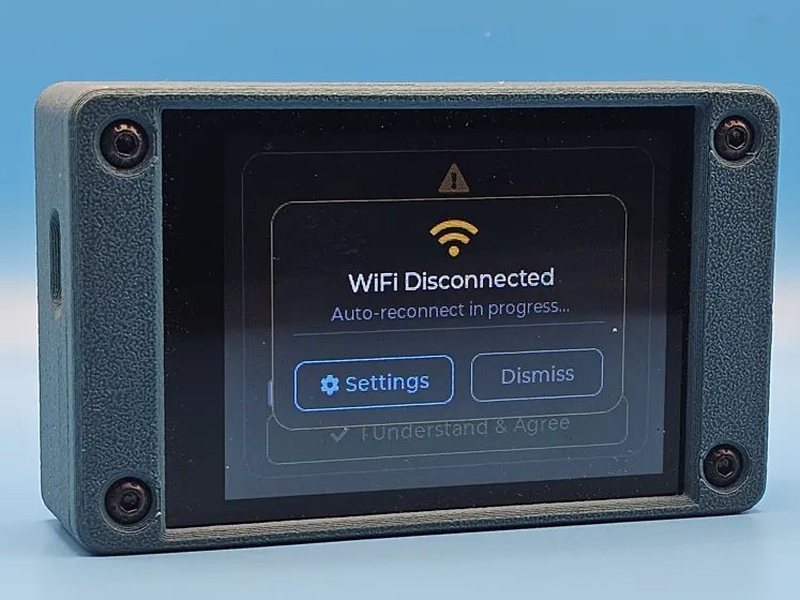
The failure I care most about is a screen still showing a number that stopped being true. So the device ages a reading out in stages, and says so in words.
03 Alarms
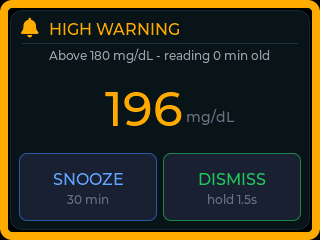
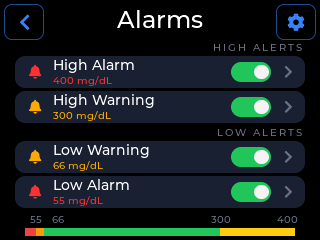
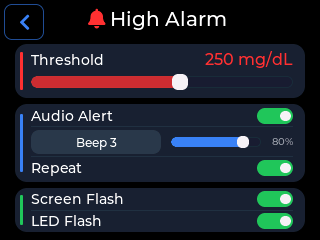
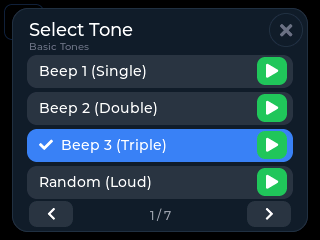
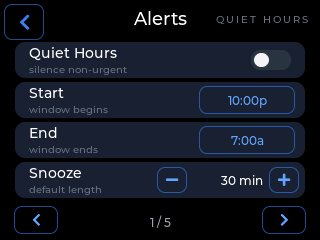
Four tiers, and you set every one of them
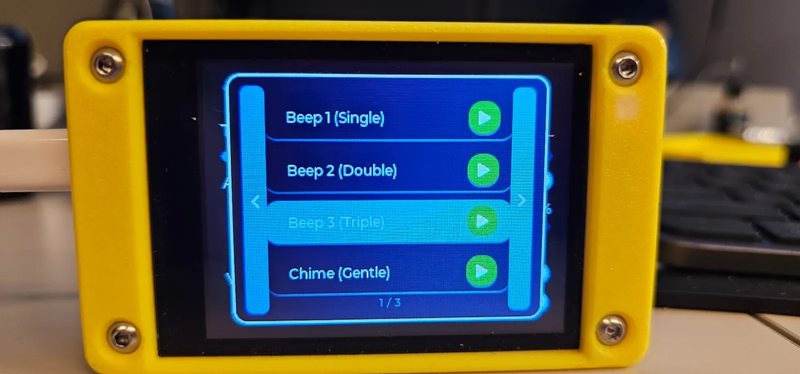
Each tier has its own threshold, tone and volume, and the two urgent ones can be told to keep sounding until somebody deals with them.
04 Setting it up
Everything is done on the device
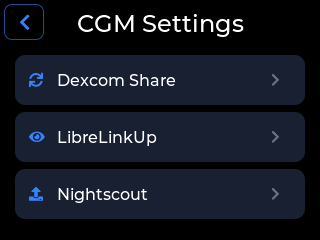
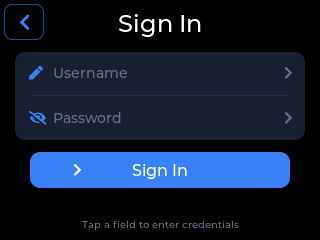
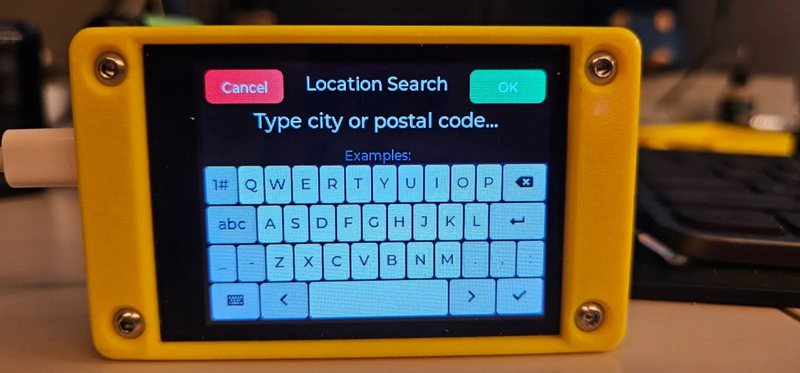
No companion app, no web portal. You pick your service and type your credentials on the touchscreen. The sign-in forms look almost identical to each other, so watch the field labels: that is the only thing on screen that tells you which one you're on.
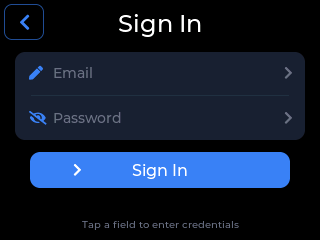
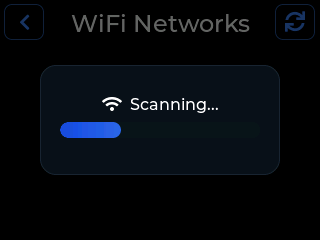
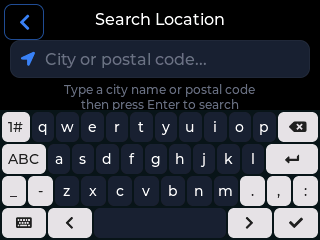
I have not got a clean capture of the Nightscout form yet. It asks for your server address and an optional API token instead of the two fields above. The Nightscout page walks through it properly.
05 Everything else
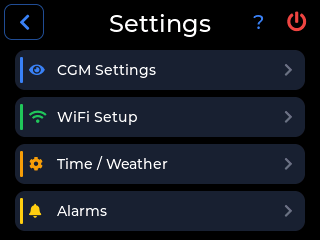
History, brightness, updates and the small print
The rest of the device. Worth stopping on the About card: the words Not FDA-cleared sit on the screen beside the version number, not only in the copy on this site.
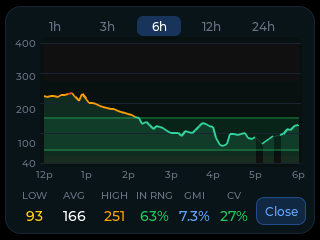
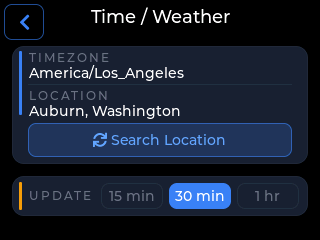
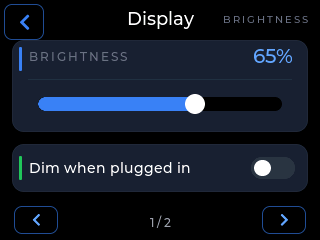
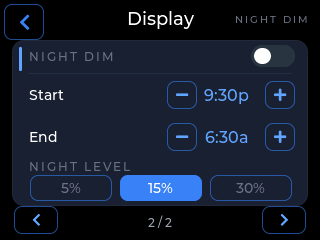
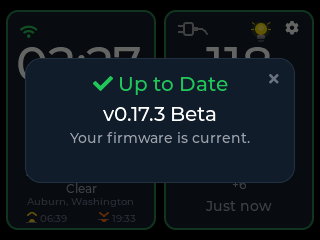
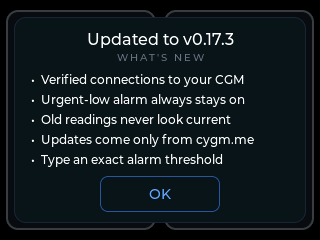
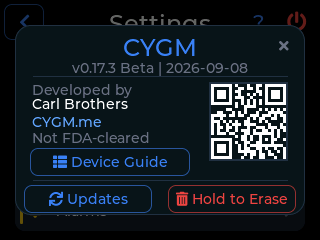
The chart on the device covers the last day. If a memory card is fitted, the same readings can be read back in the card viewer.
06 The device itself
Three parts in a printed case
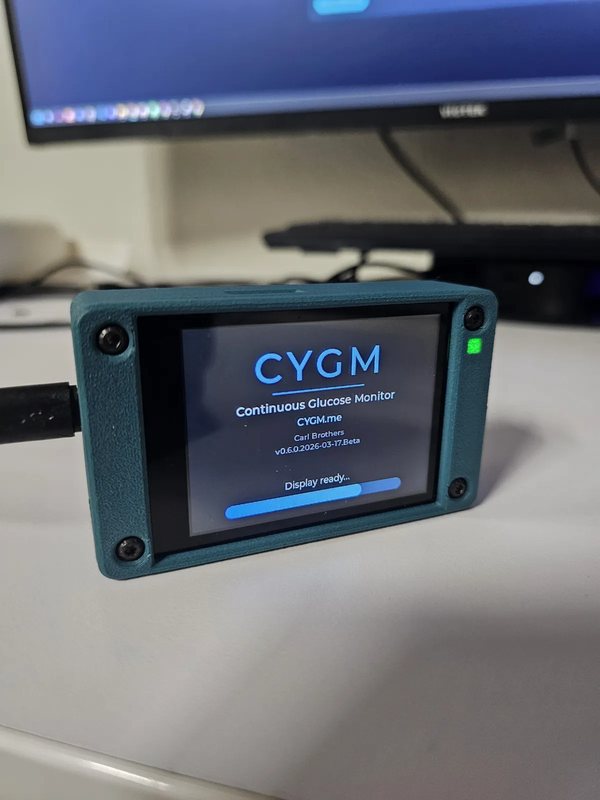
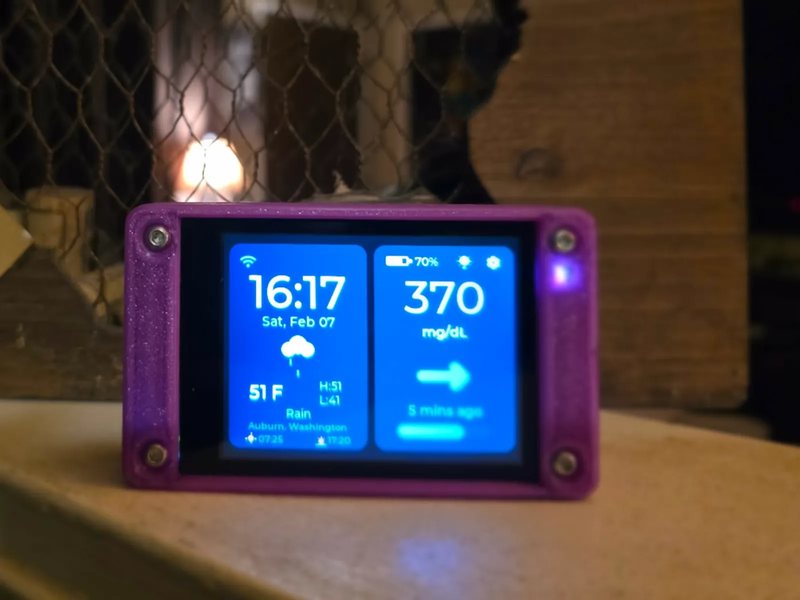
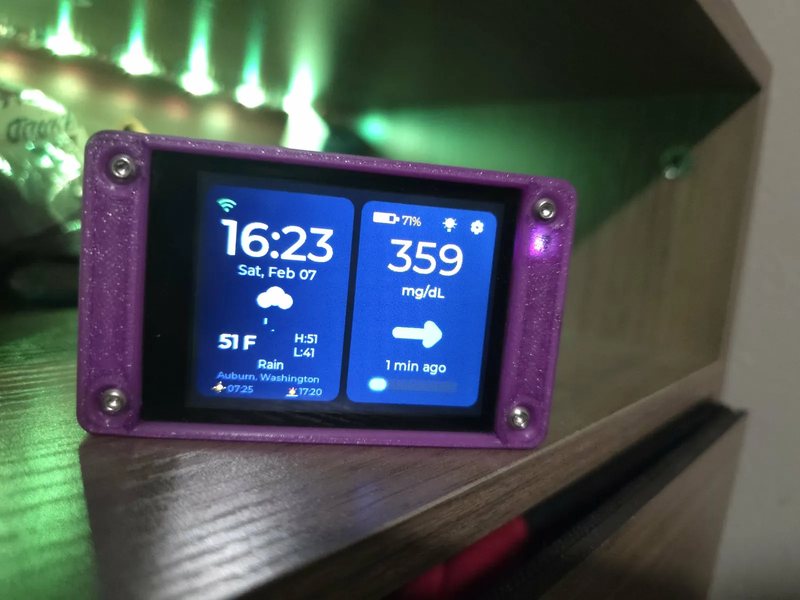
Units I built and live with, photographed where they sit. The cases came off a printer at home, in whatever filament was loaded that week. These were taken in the very early days, so what is on the screens looks different from the firmware you would flash today. The cases and the rooms are real; the software has moved on.
07 Getting started
If you want one of these on your own shelf
Three parts, about $40, and nothing to solder. The firmware flashes from a browser.
Captures taken on v1.1.10 Release
CYGM is an open-source, experimental secondary CGM display. It is not FDA-cleared or FDA-approved, and it has not been clinically validated. It shows readings that have already travelled through your own CGM's app and cloud service, so it can lag, gap or fail independently of them.
Never use it as the sole basis for a treatment decision, and never rely on it as your only alarm. Always confirm on your prescribed CGM receiver or app before dosing or treating.